Pages

Total Pageviews

Tuesday, November 10, 2015

Greece & Refugees : Nothing New


For the last few years we have seen on our news reports of refugees coming to Greece. The world has forgotten that this is not a new story for the Greeks. The majority of the public in the west has forgotten the 1920’s Treaty of Lausanne.
In 1923 there was a population exchange between Greece and Turkey it was signed at Lausanne, Switzerland, on 30 January 1923, by the governments of Greece and Turkey. It involved approximately 2 million people (around 1.5 million Anatolian Greeks and 500,000 Muslims in Greece), most of whom were forcibly made refugees and de jure denaturalized from their homelands. It was a result of the Turkish War of Independence.
The agreement therefore merely ratified what had already been perpetrated on the Turkish and Greek populations. Of the 1,200,000 Greeks involved in the exchange, only approximately 150,000 were resettled in an orderly fashion. The majority had already fled hastily with the retreating Greek Army following Greece's defeat in the Greco-Turkish War.
The Greek campaign was launched primarily as the western Allies, particularly British Prime Minister David Lloyd George, had promised Greece territorial gains at the expense of the Ottoman Empire. The armed conflict started with the Greek occupation of Smyrna,in May 1919. Their advance was checked at the Battle of Sakarya in 1921. The Greek front collapsed with the Turkish counter-attack on August 1922 and the war effectively ended with the re-capture of Smyrna by the Turkish forces.
Failure of the Greek military campaign and the expulsion of the French military from Cilicia in Anatolia forced the Allies to abandon the Treaty of Sèvres to negotiate a new treaty atLausanne with the Turkish National Movement. The Treaty of Lausanne recognized the independence of the Republic of Turkey and its sovereignty over Asia Minor, Constantinople, and Eastern Thrace. They returned to their pre-war borders, thus leaving East Thrace and Western Anatolia to Turkey. The Turkish victory also brought an end to the Occupation of Constantinople by the British forces.
The Turkish community of Greece had increased in size to over 140,000.
The population profile of Crete was significantly altered as well. Greek- and Turkish-speaking Muslim inhabitants of Crete (Cretan Turks) moved, principally to the Anatolian coast, but also to Syria, Lebanon and Egypt. Some of these people identify themselves as ethnically Greek to this day. Conversely, Greeks from Asia Minor, principally Smyrna, arrived in Crete bringing in their distinctive dialects, customs and cuisine.

Friday, October 23, 2015

Taxes ! Strange & historic !

In the 17th & 18th century's A large number of male servants ( in stately homes in the UK ) was an indication of a man’s wealth. Employing males, instead of females, created a greater expense because a tax on male servants was introduced by Lord North in 1777. The tax was to be used for the cost of fighting the Americans and the war with the French. It cost a landowner £7 for each male servant if there were eleven or more in the household. Although it was gradually reduced over the years, the tax continued until 1937.

Compounding the issue of keeping powdered footmen increased by the duty placed on the hair powder. That tax remained in place from 1786 to 1869. Is it any wonder that some landowners forced their servants to use ordinary house flour to save on expenses. A smart footman might use the household flour and then claim the reimbursement for the expense of the duty.


Poll Tax :
A poll tax, also called a per capita tax, or capitation tax, is a tax that levies a set amount per individual. It is an example of the concept of fixed tax. One of the earliest taxes mentioned in the Bible of a half-shekel per annum from each adult Jew (Ex. 30:11–16) was a form of poll tax. Poll taxes are administratively cheap because they are easy to compute and collect and difficult to cheat. Economists have considered poll taxes economically efficient because people are presumed to be in fixed supply and poll taxes therefore do not lead to economic distortions. However, poll taxes are very unpopular because poorer people pay a higher proportion of their income than richer people.[4] In addition, the supply of people is in fact not fixed over time: on average, couples will choose to have fewer children if a poll tax is imposed. The introduction of a poll tax in medieval England was the primary cause of the 1381 Peasants' Revolt. It changed the attitude of the upper class for ever in UK. The citizens had to be "taken care of" in case of revolt.. Scotland was the first to be used to test the new poll tax in 1989 with England and Wales in 1990. The change from a progressive local taxation based on property values to a single-rate form of taxation regardless of ability to pay (the Community Charge, but more popularly referred to as the Poll Tax), led to widespread refusal to pay and to incidents of civil unrest, known colloquially as the 'Poll Tax Riots'. It was one of Mrs Thatchers key policy's .

Stamp Duty :
Stamp duty is a tax that is levied on documents. Historically, this included the majority of legal documents such as cheques, receipts, military commissions, marriage licences and land transactions. A physical stamp (a revenue stamp) had to be attached to or impressed upon the document to denote that stamp duty had been paid before the document was legally effective. More modern versions of the tax no longer require an actual stamp.

The duty is thought to have originated in Spain, being introduced (or re-invented) in the Netherlands in the 1620s,France in 1651, Denmark in 1657, Prussia in 1682 and England in 1694.

In the Republic of Ireland stamp duties are levied on various items including (but not limited to) credit cards, debit cards, ATM cards, cheques, property transfers, and certain court documents. Stamp duty was originally a progressive tax with more expensive the house bought the greater the stamp duty rate. Until the budget of 2008 when the stamp duty tax was set at 1% for properties brought up to the value of €1 million and 3% on the remaining amount with a certain exception for first time buyers.

Wednesday, October 14, 2015

Who will be the next Dali Lama ?

On 24 September 2011, the Dalai Lama issued the following statement concerning his reincarnation:

When I am about ninety I will consult the high Lamas of the Tibetan Buddhist traditions, the Tibetan public, and other concerned people who follow Tibetan Buddhism, and re-evaluate whether the institution of the Dalai Lama should continue or not. On that basis we will take a decision. If it is decided that the reincarnation of the Dalai Lama should continue and there is a need for the Fifteenth Dalai Lama to be recognized, responsibility for doing so will primarily rest on the concerned officers of the Dalai Lama’s Gaden Phodrang Trust. They should consult the various heads of the Tibetan Buddhist traditions and the reliable oath-bound Dharma Protectors who are linked inseparably to the lineage of the Dalai Lamas. They should seek advice and direction from these concerned beings and carry out the procedures of search and recognition in accordance with past tradition. I shall leave clear written instructions about this. Bear in mind that, apart from the reincarnation recognized through such legitimate methods, no recognition or acceptance should be given to a candidate chosen for political ends by anyone, including those in the People’s Republic of China.

The Dalai Lama stated in 2007 that the next Dalai Lama could possibly be a woman, remarking, "If a woman reveals herself as more useful the lama could very well be reincarnated in this form".[5] In 2010 he stated that "twenty or thirty years ago", when discussing whether a woman could be a Dalai Lama in the future, he said yes but "I also said half-jokingly that if the Dalai Lama's reincarnation is female, she must be very attractive. The reason is so that she will have more influence on others. If she is an ugly female, she won’t be very effective, will she?"

Friday, October 9, 2015

Old Stillorgan Brewery : Darley's

Henry Darley's Brewery 
Was on Brewery Road ('around where the offices of DCC ltd are ), in the Stillorgan Area of County Dublin. It was operational in the 19 century for 81 years. It was owned by the Darley family. Henry Darley was born in 1801 at Wingfield, County Wicklow,( now a private school ).  He married Maria Louisa West, daughter of Matthew West ( High Sheriff of Dublin City between 1810 and 1811) and Maria Louisa de Blaisy Joly, on 13 December 1829 at St. Peter's Church, Dublin, County Dublin, Ireland. He died on 4 July 1883 at 24 Fitzwilliam Place, Dublin, County Dublin, Ireland. He was buried on 7 July 1883 at Mount Jerome Cemetery, Harold's Cross, Dublin, County Dublin, Ireland.
He was the son of Frederick Darley and Elizabeth Guinness.
Frederick Darley was born on 28 February 1763 at Fernhill, County Dublin, Ireland. ( now owned by Dunlaoghaire county council ) He was the son of Henry Darley. He married Elizabeth Guinness, daughter of Arthur Guinness and Olivia Whitmore. He died on 2 April 1847 at age 84.
     He was Chief Magistrate. He held the office of Lord Mayor of Dublin between 1808 and 1809.
  The brewery produced Ale and Beer. There is no records left. The stream which ran through the brewery cannot be seen anymore as it has been covered.

New Advert for EIR : old song

Fionnghuala

The name of the song is Fionnghuala, it derives from Irish mythology.

In Irish mythology Fionnghuala was the daughter of Lir, and appeared in many Irish tales such as the 'Children of Lir', in which she was cursed.

You might recognise the modern version of the name, as it was shortened to 'Nuala'.

The style of the song is an Irish one known as Puirt a Beul, which is constructed around the sounds of the words rather than their meanings.

The song was sung in old times by poor workers in order to motivate and raise their spirits.

Eir advertisement arranged by John Walsh

The song originates from Scotland and Irish mythology, and was originally sung in Scots Gaelic.

Its ads are soundtracked by the song Fionnghuala, a new arrangement of which was commissioned from composer John Walsh. Get used to hearing it - Eir has booked 6,000 television ads and 4,500 radio ones. If these ads were played back to back, they would add up to 13 days, seven hours and 21 minutes.
The Scottish Gaelic title of this song is "Fionnghuala". The English translation is "Fingal's Bothies".
The blacksmith said, "I'll wait"
The blacksmith said, "I'll go"
The blacksmith said, in his confusion
Standing at the door of the barn
That he was going to go courting

Chorus:
Island of bothies, of bothies
Fingal's bothies
Island of bothies, of bothies
Fingal's bothies

I'd knock spots off the birds
I'd knock spots off the hakes
Little lythes of the sea
We would take a while hauling them in
If our hand lines last

We got nothing here
We got nothing here
We got nothing here
We would take a while hauling them in
If our hand lines last

I'd knock spots off the birds
I'd knock spots off the hakes
Little lythes of the sea
We would take a while hauling them in
If our hand lines last

We got nothing here
We got nothing here
We got nothing here
We would take a while hauling them in
If our hand lines last

The blacksmith said, "I'll wait"
The blacksmith said, "I'll go"
The blacksmith said, in his confusion
Standing at the door of the barn
That he was going to go courting
The Irish version
Thuirt an gobha fuirighidh mi (The blacksmith said, "I'll wait")
'S thuirt an gobha falbhaidh mi (The blacksmith said, "I'll go"(
'S thuirt an gobha leis an othail (The blacksmith said, in his confusion)
A bh' air an dòrus an t-sàbhail (Standing at the door of the barn)
Gu rachadh e a shuirghe (That he was going to go courting)

Sèist: Chorus (after each verse):
'Si eilean nam bothan nam bothan (Island of bothies, of bothies)
Eilean nam bothan nam bothan (Island of bothies, of bothies)
Am bothan a bh' aig Fionnghuala (Fingal's bothies)
'Si eilean nam bothan nam bothan (Island of bothies, of bothies)
Eilean nam bothan nam bothan (Island of bothies, of bothies)
Am bothan a bh' aig Fionnghuala (Fingal's bothies)

Bheirinn fead air fulmairean (I'd knock spots off the birds)
Bheirinn fead air falmairean (I'd knock spots off the hakes)
Liuthannan beaga na mara (Little lythes of the sea)
Bheireamaid greis air an tarrainn (We would take a while hauling them in)
Na maireadh na duirgh dhuinn (If our hand lines last)

Cha d'thuirt an dadan a' seo (We got nothing here)
Bheireamaid greis air an tarrainn (We would take a while hauling them in)
Na maireadh na duirgh dhuinn (If our hand lines last)

Thuirt an gobha fuirighidh mi (The blacksmith said, "I'll wait")
'S thuirt an gobha falbhaidh mi (The blacksmith said, "I'll go")
'S thuirt an gobha leis an othail (The blacksmith said, in his confusion)
A bh' air an dòrus an t-sàbhail (Standing at the door of the barn)
Gu rachadh e a shuirghe (That he was going to go courting)

Wednesday, September 16, 2015

Rufugees in Europe - Crisis

The USA have a responsibility to take in more refugees from the Middle East especially From Iraq. The Islamic State (IS) contains part of Saddam Hussein's ( SH ) Army.
When the USA invaded and toppled they disbanded his large army. They Americans & British were only looking for chemical weapons and didn't follow up the stockpiles of conventional arms. Of course they didn't find the chemicals as they hadn't sold them any . Generals in the north of the country hid a lot of the weapons and disappeared into the countryside. They were part of the Sunni population who were in the minority but under SH controlled the country. Now they have reappeared as the military force behind IS. They used there expertise to gain control of much of Northern Iraq and Syria, . The refugees fleeing to Europe are a direct consequence of the American failed policies in Iraq. It should be there responsible to help with the refugee crisis.

Tuesday, September 1, 2015

Did you know what you can see in Paris !

Did you know what you can see in Paris !
John : 19-2-5.   "The soldiers twisted together a crown of thorns and put it on his head. They clothed him in a purple robe"

This is the quote from the Christian Bible. So Jesus had a crown of thorns put on his head while on the cross. Well it can be seen to day in Notre Dam Cathedral in  Paris. It is one of the most important relics in the Christian world. On the first Friday of every month and every Friday in lent there is the VENERATION OF THE CROWN OF THORNS. The crown housed in the Paris cathedral is a circle of canes bundled together and held by gold threads. The thorns were attached to this braided circle, which measures 21 centimetres in diameter. The thorns were divided up over the centuries by the Byzantine emperors and the Kings of France. There are seventy, all of the same type, which have been confirmed as the original thorns.
In the 4 th century the relics were kept in the basilica on Mount Zion in Jerusalem. Between the 7th and the 10th centuries, the relics were moved progressively to the Byzantine emperors’ chapel in Constantinople, mainly to keep them safe from pillaging. In 1238, Byzantium was governed by Latin Emperor Baldwin of Constantinople. As he was in great financial difficulty, he decided to pawn the relics in a Venetian bank to get credit.

Saint Louis, the king of France, took over and paid back the Venetians. On 10 August 1239, the king, followed by a brilliant procession, welcomed twenty-nine relics in Villeneuve-l’Archevêque. On 19 August 1239, the procession arrived in Paris; the king took off his royal garments. Wearing only a simple tunic and with bare feet, assisted by his brother, took the Crown of Thorns to Notre-Dame de Paris before placing the relics in the palace chapel. He built a reliquary worthy of housing these relics, Sainte Chapelle.( one of the greatest chapels ever built & still standing ).

During the French revolution, the relics were stored in the National Library. After the Concordat in 1801, they were given back to the archbishop of Paris who placed them in the Cathedral treasury on 10 August 1806. They are still housed there.

It might not be the exact crown of thrones but a lot of people still venerate it. It has been visited by millions over the years and can still be today. In our modern world it still has a place.

Sunday, August 30, 2015

The Great European Famine 1315-17

                                   ✳️✳️✳️ Forgotten History ✳️✳️✳️
The Great Famine started with bad weather in spring 1315. Universal crop failures lasted through 1316 until the summer harvest in 1317, and Europe did not fully recover until 1322. The period was marked by extreme levels of crime, disease, mass death, and even cannibalism and infanticide. The famine caused millions of deaths over an extended number of years and marked a clear end to the period of growth and prosperity from the eleventh to thirteenth centuries. The Great Famine was restricted to Northern Europe, including the British Isles, northern France, the Low Countries, Scandinavia, Germany 🇩🇪 and western Poland 🇵🇱 It also affected some of the Baltic states, except for the far eastern Baltic that was only affected indirectly. The famine was bounded in the south by the Alps and the Pyrenees.
In the spring of 1315, unusually heavy rain began in much of Europe. It continued to rain throughout the spring and summer, and the temperature remained cool. These conditions caused widespread crop failures. The straw and hay for the animals could not be properly dried, so there was no fodder or bedding for the livestock.
In addition to starvation, disease ravaged the people. Pneumonia and tuberculosis exacted a heavy toll. Survivors weakened to such an extent that they struggled to work their fields. Additionally, people consumed so much seed that it made it difficult to restore agricultural yields back to their pre-famine levels once the crisis subsided. The famine killed up to 25% of the population. Real numbers are difficult to determine.
Ireland 🇮🇪 was affected : The Great Famine coincided with, and greatly influenced, the Bruce campaign in Ireland, the attempt of Edward de Bruce, a younger brother of Robert the Bruce of Scotland, to make himself High King of Ireland. At first the Irish-Scottish alliance seemed unstoppable, winning battle after battle and gaining control of most of Ireland in less than a year, seemingly on theverge of  driving the Anglo-Norman settlers out of Ireland altogether. The famine hit Ireland hard in 1317 and had stricken most of the country, making it difficult for Edward de Bruce to provide food to most of his men. He never regained momentum and was defeated and killed in the Battle of Faughart in 1318, ending the last organized effort in many centuries to end English rule in Ireland. Famine had a part in this outcome.
 The Great Famine may have been precipitated by  volcanic events, perhaps that of the volcano of Mount Tarawera, New Zealand, which lasted about five years. There were others in the 13 th century.Ecuador’s Quilotoa volcano, which did erupt in the 12th to 14th centuries. The largest of the all was the Indonesia’s Samalas volcano The eruption occurred in 1257, and it could also be one of the volcanoes that started a 600-year cold period called the Little Ice Age. So it could an impact of many including ; Okataina in New Zealand, El Chichón in Mexico🇲🇽, Quilotoa in Ecuador and Samalas in Indonesia (next to Mount Rinjani).

Monday, June 1, 2015

American Taxpayers being robbed !

American Foreign Policy Costing !

USA,Iraq,War,Food stamps,poor


Iraqi security forces lost 2,300 Humvee armoured vehicles when the Islamic State jihadist group overran the northern city of Mosul, plus an arsenal of weapons and munitions.

Last year, the U.S. State Department approved a possible sale to Iraq of 1,000 Humvees with increased armour, machineguns, grenade launchers, other gear and support that was estimated to cost $579 million. List price for Humvee in 2011 was $200,000.


The American taxpayers was robbed ! And they have more to com. So will the Americans use missiles to take them out.a Hellfire missile cost $60K-$80K and $1K-$2K an hour to run.

So let's say 2000 humvees multiplied by $100,000 multiplied by 2000 missiles @ $70k is equal to $540 million. This was for one instance going on in Iraq. 

All this going on abroad while millions of Americans are living & dependant on food stamps.

Thursday, May 7, 2015

Inspector Montalbao


Detective Montalbano solves crimes in Sicily. 

Where are the locations in the start sequence?


Inspector Montalbano lives and works in the fictional town of "Vigàta", in the equally fictional district of "Montelusa". Camilleri based Vigata on his home town of Porto Empedocle, on Sicily's south-west coast, while Montelusa, the district headquarters, is based on Agrigento. However the dramatizations of the Montalbano stories were mainly filmed at Ragusa, while the seaside and harbour locations were at Punta Secca and Licata.

Sunday, February 22, 2015

Lillian Tintori - tragedy in the making !


  1. Lilian Adriana Tintori Parra (Caracas, 5 May 1978), is a Venezuelan human rights activist and the wife of politician Leopoldo López Mendoza, National Coordinator of the party Popular Will (Voluntad Popular), arrested by the government.
    She was a record breaking wind surfer and TV & Radio presenter before marrying Leopoldo. She is now an Activest. She could be the next tragic First Lady of South America. She could end up like Myanmar’s opposition leader Aung San Suu Kyi. Her husband could be murdrered and she could be put under house arrest. Eventually after a civil war she could becoming President. It could be so different. 

    In 1958 Venezuela became a democracy. However in 1998 Hugo Chávez was elected president. Chavez introduced a left wing regime in Venezuela and introduced his "The Bolivian Revolution". Chavez was re-elected in 2006 after spending nearly all the states reserves on social programs at home and subsidising other anti American countries with cheap oil. He allied Venezuela with Cuba. However Chavez died in 2013. He was replaced by Nicolás Maduro. Nicolás Maduro Moros is the President of Venezuelae since 2013. Previously he served under President Hugo Chávez as Minister of Foreign Affairs from 2006 to 2013 and as Vice President of Venezuela from 2012 to 2013. He took over from Chaves.

    The social programs that came into being during the term of Hugo Chávez sought to reduce social disparities and were funded in large part by oil revenues. The sustainability and design of the welfare programs have been both praised and criticized. The oil price has dropped & production has been reduced with no new investment. The economy is crippled with ques for everything including toilet paper. Corruption is rife.

    In a democracy, Mr Maduro would have little hope of surviving as president past next year. The government’s ruinous economic policies have caused shortages of basic consumer goods and medicines and a sharp rise in inflation and poverty. Its approval ratings are below 20%.
     
    The fear is that the government is prepared, if all else fails, to declare a state of emergency and suspend the constitution. Evidence is growing that it will do whatever it takes to hold on to power. 


Tuesday, September 30, 2014

The Khmer Empire

The Khmer empire was a powerful state in South East Asia, formed by people of the same name, lasting from 802 CE to 1431 CE. At its peak, the empire covered much of what today is Cambodia, Thailand, Laos, and southern Vietnam. 
Using the city of Angkor as capital, for  centuries the Khmer empire expanded its territorial base, mostly to the north (entering the Khorat plateau) and the west, to the Chao Phraya basin and beyond. To the east outcomes were different: several times the Khmer fought wars against two neighboring peoples with powerful kingdoms, the Cham (in today’s central Vietnam) and the Vietnamese
The Khmer were great builders, filling the landscape with monumental temples, huge reservoirs (called baray) and canals, and laying an extensive road network with all sorts of bridges -the main highways are 800 km long. The most stunning temple, Angkor Wat, is a microcosm of the Hindu universe and defies imagination as the world’s largest religious complex - covering 200 hectares; nowadays it is crowded with tourists amazed with ruins that until recently were covered by the jungle. Its construction took some 30 years and was started by one of the greatest kings, Suryavarman II, around 1122 CE.
Angkor’s original name was Yashodharapura (“Glory-bearing city”), and at its apogee it was the biggest city in the world, covering an area of a thousand square kilometres, close to that of modern Los Angeles in the USA. Its population is much harder to estimate, but a figure of aproximately one million. London England had a population of approx 18,000 at the same time.

The ancient Khmers were a traditional agricultural community, relying heavily on rice farming. The farmers, who formed the majority of kingdom's population, planted rice near the banks of the lake or river, in the irrigated plains surrounding their villages, or in the hills when lowlands were flooded. The rice paddies were irrigated by a massive and complex hydraulics system, including networks of canals and Barays, or giant water reservoirs. This system enabled the formation of large-scale rice farming communities surrounding Khmer cities. Sugar palm trees, fruit trees, and vegetables were grown in the orchards by the villages, providing other sources of agricultural produce such as palm sugar, palm wine, coconut, various tropical fruits, and vegetables.

Located by the massive Tonlé Sap lake, and also near numerous rivers and ponds, many Khmer people relied on fresh water fisheries for their living. Fishing gave the population their main source of protein, which was turned into Prahok — dried or roasted or steamed fish paste wrapped in banana leaves. Rice was the main staple along with fish. Other source of protein included pigs, cattle, and poultry, which were kept under the farmers' houses that were on stilts to protect them from flooding.

Thursday, September 25, 2014

USA foreign Policy


 Barack Obama   is the fourth straight US president to bomb Iraq - the last president to not commit to such an action was Ronald Reagan.

the Islamic State are armed with state-of-the-art US-made weaponry captured from fleeing Iraqi troops. In short, the US is bombing its own weapons.

In 2008 the U.N. Secretary-General Ban Ki-moon said about Gaza.
“Do we have to continue like this: build, destroy, and build, and destroy? We will build again -- but this must be the last time to rebuild. This must stop now,” 

The United Nations Relief and Works Agency for Palestine Refugees in the Near East (UNRWA). UNRWA provides direct humanitarian aid, human development, and protection for more than 5 million Palestine refugees registered with the Agency. UNRWA USA is an independent 501(c)(3) non-profit that supports the work of UNRWA through fundraising, education, and advocacy. 


( 2008-2009 President George W. Bush said "We care about the people of Gaza, and, therefore, have provided millions of dollars of fresh aid to the United Nations to help". President Barack Obama authorised the use of $20.3 million in emergency funding for immediate humanitarian assistance to Palestinian refugees and conflict victims in the Gaza Strip. )

USAID has funded multiple projects in the West Bank and Gaza to improve infrastructure, providing funds to companies willing to do the job. One of them was International Relief and Development, a U.S.-based organization.

In August 2008, IRD was awarded a five-year, $300 million contract for construction activities in the West Bank and Gaza, as part of a USAID program designed to contribute to “the building of new infrastructure required for a viable Palestinian state.”
( July 2014 The U.S. is sending $47 million in humanitarian aid to the besieged Gaza Strip )

In 2012 the United States foreign aid given by the United States to gaza/ West Bank was $457million.

The United States is the largest single supplier of military equipment to Israel. 
Between 1998-2005 the U.S. Gave Isreal $9.1 billion military Aid.

Tuesday, June 3, 2014

The Year 1014

Was 1054 the most important date in world Christian History ?

In 1054, the medieval Christianity split into two branches.
Known as the great schism, Eastern Orthodox Catholics and Roman Catholics churches developed.
The Byzantine Empire was the dominant world power headquartered in   Constantinople ( now Istanbul ). 
The Byzantine Empire was the predominantly Greek-speaking continuation of the Roman Empire during Late Antiquity and the Middle Ages. Its capital city was Constantinople, originally known as Byzantium. 
Population: 5 million (1282)
Capital: Constantinople
Founded: May 11, 330 AD and existed for nearly 1,125 years.
Byzantine history goes from the founding of Constantinople as imperial residence on 11 May 330 CE until Tuesday 29 May 1453 CE, when the Ottoman sultan Memhet II conquered the city. Most times the history of the Empire is divided in three periods.
Government: Monarchy, Autocracy, Absolute monarchy
The split came when Pope Leo III crowned Charlemagne, King of the Franks, as Holy Roman Emperor in 800. From the Byzantine viewpoint, this was a slap to the Eastern Emperor and the Byzantine Empire itself


Euro Election Results 2014


European Election: 23 May 2014
  Midlands North West
          European Parliament 🏢🏣🏢🏫🌇

4 Seats 14 Candidates 8 Counts
Electorate: 1,202,997 Quota: 129,290

Total valid 646,445 53.74%
Spoilt votes 17,258 2.60%
Total poll         663,703 55.17%

European Election: 23 May 2014
  Dublin
         European Parliament
3 Seats 12 Candidates 7 Counts
Electorate: 820,668       Quota 88,144

Total valid 352,575 42.96%
Spoilt votes 6,368 1.77%
Total poll         358,943 43.74%

European Election: 23 May 2014
 South 
 4 Seats 15 Candidates 12 Counts 
Electorate: 1,221,683.       Quota 131,500

Total valid 657,498 53.82%
Spoilt votes 21,798 3.21%
Total poll         679,296 55.60%

Note 📢📢 Large Spoilt vote numbers 


Thursday, May 29, 2014

Scotland facts

In 1750's 70% literacy in Scotland had 5 Universities ! Population 1755 1,265,380 today 2011 5,295,000
More facts here's ⚠️ 50 ⚠️
1. The official animal of Scotland is the Unicorn.
2. The shortest scheduled flight in the world is one-and-a-half miles long from Westray to Papa Westray in the Orkney Islands of Scotland. The journey takes 1 minute 14 seconds to complete.
3. Scotland has approximately 790 islands, 130 of which are inhabited.
4. The Neolithic settlement of Skara Brae (pictured below), on the island of Orkney, is the oldest building in Britain, dating from 3100 BC.
5. The Hamilton Mausoleum in South Lanarkshire has the longest echo of any man-made structure in the world; a whole 15 seconds.
6. Scotland has more than 600 square miles of freshwater lakes, including the famous Loch Ness.
7. The capital of Scotland, Edinburgh, is only its second largest city, after Glasgow.
8. Edinburgh was the first city in the world which had its own fire brigade.
9. Like Rome, Edinburgh was built on seven hills and the capital has more listed buildings than anywhere in the world.
10. Scotland had its own monarch until 1603. After Elizabeth I died, James VI of Scotland also became James I of England, ruling both countries.
11. St Andrews Links is considered the "home of golf"; the sport has been played there since the 15th century.
12. Queen Victoria is reputed to have smoked cigarettes during her visits to the Highlands of Scotland to keep away midges.
13.Edinburgh was home to Skye terrier Grey Friar’s Bobby, who captured the hearts of the nation by sitting on the grave of his dead owner for 14 years.
14.Scotland is currently the second largest country in the UK, after England.
15. The highest point in Scotland is Ben Nevis,  at 4,406ft (1343m)
16.The motto of Scotland is “Nemo me impune lacessit”, or: "No one provokes me with impunity". It is used by the Order of the Thistle and on later versions of the Royal coat of arms.
17. The country is a favourite with the British Royal family, who holiday at Balmoral castle in Royal Deeside.
18. In the north east of the country, girls are called “quines” and boys “louns”.
19. The very first recorded appearance of the elusive Loch Ness Monster occurred in 565 AD, when a " water beast " attacked one of St. Columba's followers in the loch. '''
20. Scottish city Aberdeen is known as Europe’s oil capital, or the “Granite City”.
21. The deepest loch in Scotland, Loch Morar, reaches 1,077ft (328m) down and is ranked the seventeenth deepest lake in the world.
22. Scotland’s smallest distillery, Edradour in Pitlochry, has 100,000 visitors per year but produces just 90,000 litres of malt whisky. There are 107 distilleries ( only 7 grain ) in Scotland (2013)
23. It is home to the oldest tree in Europe , a twisted yew which has stood in Fortingall for 3,000 years. According to local legend, Pontius Pilate was born in its shade and played there as a child
27. The Kingdom of Scotland remained as an independent state until 1 May 1707, when the Acts of Union joined it with England, in the United Kingdom of Great Britain.
28. Since July 1, 1999, Scotland has its own parliament, for the first time since 1707.
29. The country has an area of 30,414 square miles (78,772 km²)
30. The total population is around 5.2 million, around 8.5 per cent of the UK’s population.
31. The country has approximately 167.5 people living per square mile.
32. There are as many Scottish people living in North America as in Scotland, with censuses in the United States and Canada identifying around five million people claiming Scottish ancestry.
33. The country still has its own legal system, separate from England, Wales, and Northern Ireland. Juries can return verdict of “guilty”, “not guilty” and “not proven.”
34. The Bank of Scotland, founded in 1695, is the oldest surviving bank in the UK. It was also the first bank in Europe to print its own bank notes.
35. Famous Scottish inventions include the television, developed by John Logie Baird in 1925, the telephone by Alexander Graham Bell in 1876 and penicillin, by Alexander Fleming in 1928.
36. The first teaching hospital in America, the Baltimore Infirmary was founded by a Glasgow surgeon, Granville Sharp Pattison, in 1816.
37. Scotland has three officially recognised languages: English, Scots and Scottish Gaelic, with just one per cent of the population using the last.
38. It is home to 19 universities and institutes of higher education, including St Andrews, where the Duke and Duchess of Cambridge met. They returned last year (see video below)
43. Scotland has spawned some of the greatest thinkers of the modern age, including Adam Smith, James Watt, David Hume and John Stuart Mill.
44. Notable Scottish inventions include the method of logarithms (1614), tarmac (1820) and the pneumatic tyre (1887).
45. Many of Scotland’s most famous inventions – kilts, tartans and bagpipes - were actually developed elsewhere. Kilts originated in Ireland, tartans have been found in Bronze Age central Europe and bagpipes are thought to have come from ancient central Asia.
46. Famous names from Scottish literature include: Sir Walter Scott, Lord Byron and Sir Arthur Conan Doyle.
47. The flag of Scotland is known as the saltire (pictured below) or St. Andrews Cross.
49. Scotland has the highest proportion of redheads in the world. Around 13 per cent of the population has red hair, with 40 per cent carrying the recessive gene.
50. The first official international football match was played at the West of Scotland Cricket Club in Partick in 1872, between Scotland and England.

Thursday, May 22, 2014

World War One Medal

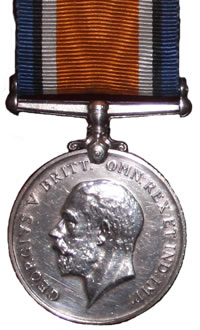
The British War Medal, 1914-18

Established on 26th July 1919.

The Front of the British War Medal, 1914-18 (Squeak)

Also known as 'Squeak'.

The silver or bronze medal was awarded to officers and men of the British and Imperial Forces who either entered a theatre of war or entered service overseas between 5th August 1914 and 11thNovember 1918 inclusive. This was later extended to services in Russia, Siberia and some other areas in 1919 and 1920.

Approximately 6.5 million British War Medals were issued. Approximately 6.4 million of these were the silver versions of this medal. Around 110,000 of a bronze version were issued mainly to Chinese, Maltese and Indian Labour Corps. The front (obv or obverse) of the medal depicts the head of George V.

The recipient's service number, rank, name and unit was impressed on the rim.


WW One Medal

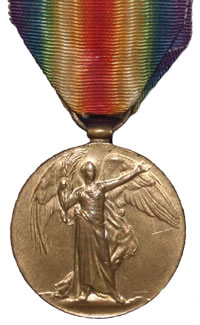
The Allied Victory Medal

The Front of the British Victory Medal (Wilfred)

Also known as 'Wilfred'

It was decided that each of the allies should each issue their own bronze victory medal with a similar design, similar equivalent wording and identical ribbon.

The British medal was designed by W. McMillan. The front depicts a winged classical figure representing victory.

Approximately 5.7 million victory medals were issued. Interestingly, eligibility for this medal was more restrictive and not everyone who received the British War Medal ('Squeak') also received the Victory Medal ('Wilfred'). However, in general, all recipients of 'Wilfred' also received 'Squeak' and all recipients of 'Pip' also received both 'Squeak' and 'Wilfred'.

The recipient's service number, rank, name and unit was impressed on the rim.


Monday, April 7, 2014

Corrupt Politics in Ireland Today.

This is why Politics in Ireland is corrupt !! ⚠⚠⚠Agriculture minister Simon Coveney’s former sailing partner architect Paul Hyde has been appointed to An Bord Pleanala by Minister Phil Hogan after having been appointed to the board of the Marine Institute in 2012 by Coveney.

Mr Hyde is due to resign from the Marine Institute to take up the planning position at a salary of €111,214.

Coveney and Hyde were in school together in PBC Cork and have been members of the Royal Cork Yacht Club. They co-owned a yacht Dark Angel previously. Hyde’s father, Stephen has donated at least twice to Coveney’s election campaigns, giving €2,500 for the 2007 general election.


⛵️⛵️⛵️⛵️⛵️⛵️⛵️⛵️⛵️⛵️⛵️⛵️⛵️⛵️⛵️⛵️⛵️⛵️⛵️⛵️⛵️⛵️⛵️⛵️⛵️⛵️⛵️⛵️⛵️⛵️⛵️⛵️⛵️⛵️

Sunday, March 30, 2014

Buddha

Buddha 
The man who was to become the Buddha was born Siddhattha Gotama around 2,600 years ago as a prince of a small territory near what is now the Indian-Nepalese border. Though he was raised in splendid comfort, enjoying aristocratic status, no amount of material pleasure could conceal life’s imperfections from the unusually inquisitive young man. At the age of 29 he left wealth and family to search for a deeper meaning in the secluded forests and remote mountains of Northeast India. He studied under the wisest religious teachers and philosophers of his time, learning all they had to offer, but they could not provide the answers he was seeking. He then struggled with the path of self-mortification, taking that practice to the extremes of asceticism, but still to no avail.

Then at the age of 35, on the full moon night of May, he sat beneath the branches of what is now known as the Bodhi Tree, in a secluded grove by the banks of the river Neranjara, and developed his mind in deep and luminous, tranquil meditation. Using the extraordinary clarity of such a mind, with its sharp penetrative power generated by states of deep inner stillness, he turned his attention to investigate the truth of mind, universe and life. Thus he gained the Supreme Enlightenment experience and from then on he was known as the Buddha, the Awakened One.

His Enlightenment consisted of the most profound and all-embracing insight into the nature of mind and all phenomena. This Enlightenment was not a revelation from some divine being, but a discovery made by himself based on the deepest levels of meditation and the clearest experience of mind. It meant that he was free from the shackles of craving, ill-will and delusion, that all forms of inner suffering had been eliminated and that he had acquired unshakeable peace.